AI Drawing : Trace & Sketch
- 4.1
- Rating
- 5.00M
- Installs
- Free
- Price
 Analysis by App-foxy
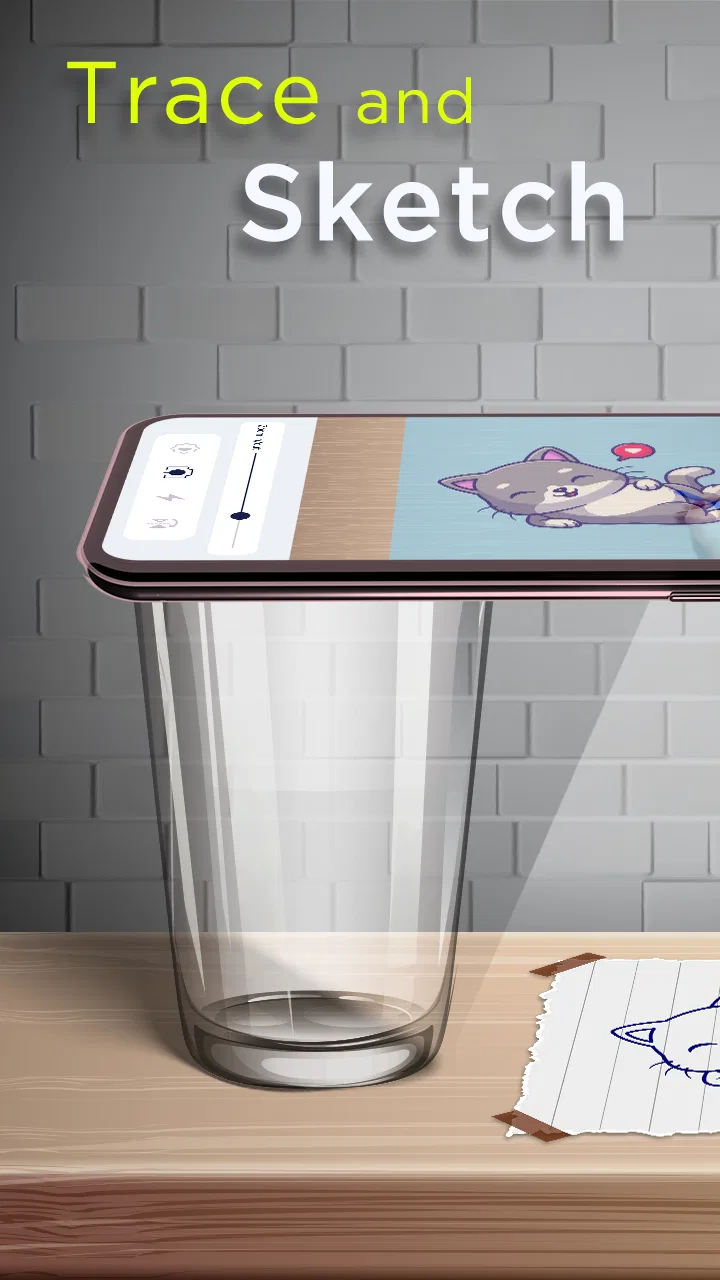
When I first opened AI Drawing : Trace & Sketch, I understood its appeal almost immediately: it is designed to help turn a phone into a simple drawing guide rather than asking me to begin with a blank page and perfect confidence. That makes it especially approachable for anyone who wants to sketch but feels unsure about proportions, outlines, or where to start. It belongs to the Art & Design category, is free to install, and is suitable for Everyone, so the basic idea is easy to recommend to families, beginners, and casual creative users.
The app comes from The App Company INC and presents itself as an AI drawing tool. Its store summary focuses on learning to sketch, trace, paint, and create finished artwork, but my interest is less in the promise of an instant masterpiece and more in how useful the guided process feels. In practice, the best way to approach it is as a visual aid: something that can help me observe shapes, follow lines, and build confidence while I work on paper or on a drawing surface.
Its average rating is 3.7 from around 7.6 thousand ratings, while the listing shows around 193 written reviews. That combination suggests a mixed but substantial user response rather than universal satisfaction. With over 5 million installs, it is clearly familiar to a large audience. I would not treat popularity as proof that it will suit everyone, but it does make the app worth examining if you are looking for a low-pressure introduction to digital-assisted sketching.
You May Also Like

 Blood Strike: 2.5 Anniversary
Blood Strike’s Loadouts Turn Every Drop Into a Tactical Gamble
A close look at Blood Strike’s custom loadouts: how fast access to signature weapons reshapes its battle royale rhythm, rewards preparation, and narrows the gap between fights.

 Pandora - Music & Podcasts
Pandora’s Music Is Easy to Start, but Harder to Recover
Pandora’s strength is its low-effort path from a seed to a station. Its weak spot is how much confidence it asks you to place in connection, setup, and quiet recovery.

 8 Ball Pool
 Is Built on Rivalries, Rematches, and Routine
A close look at the rivalries, rematches, shared routines, and unanswered safety questions that turn a quick pool match into a persistent mobile community.

 Samsung Music
’s Quiet Strength Is Playing What You Already Own
Its reach comes less from spectacle than from dependable access to a personal library. That simplicity is both the app’s strongest retention engine and its ceiling.

 AccuWeather: Weather Radar
AccuWeather Review: A Quick, Clear Forecast for Everyday Decisions
For everyday plans, the best forecast is the one you can understand quickly. AccuWeather makes rain timing, radar, and local conditions easy to act on, with a few trade-offs.

 Hill Climb Racing
Why Hill Climb Racing Still Turns Crashes Into One More Run
A tiny car, a bumpy hill and one more upgrade: Hill Climb Racing keeps resurfacing because its simple chaos makes every near-miss feel personal.
More From Our News Desk



What the first session is really like
In my first session, I’d focus less on making a polished picture and more on learning how the guided drawing process feels from start to finish. Starting with a clear, uncomplicated subject gives me room to notice where the guide helps and where my own hand control matters. That first impression makes it easier to prepare a setup that supports practice rather than adding avoidable frustration.
Start with a small, achievable drawing
My strongest advice for a first-time user is to avoid choosing the most detailed image available. A simple object, animal outline, flower, or cartoon-style subject gives you a better chance of understanding the tracing process without becoming distracted by tiny lines. The point of the first session is not to produce something frame-worthy. It is to learn how the guide behaves and how closely your hand can follow it.
This distinction matters because tracing is not the same as drawing an image automatically. The app can support your hand and your visual judgment, but you still have to control the pencil, decide how much pressure to use, and correct mistakes. If you expect a finished result after one tap, you may find the experience disappointing. If you see it as a practice layer between looking at a reference and drawing independently, it becomes much more useful.
I also found that the experience works best when I slow down at corners and intersections. Beginners often rush because a straight section feels easy, then lose the shape when several lines meet. Following the outline in short, deliberate movements produces a cleaner result than trying to copy the entire subject in one continuous motion. This is a small habit, but it is one of the most valuable lessons the app can encourage.
Why the guided approach helps beginners
Traditional sketching from a blank page demands several decisions at once: size, placement, perspective, proportion, and detail. That can make a new artist freeze before the first mark. A tracing-focused workflow removes some of that pressure. I can concentrate on hand control and observation instead of inventing the whole structure immediately.
That makes the app a good fit for someone who wants to practice drawing during a short break. For example, I can choose a simple subject after dinner, spend a few minutes establishing its outer shape, and then add a small amount of detail. The session feels more manageable than opening a large drawing program with a complicated toolset. It is also suitable for a parent helping a child try drawing for the first time, provided the child understands that the guide is assistance, not a substitute for practice.
There is a useful trade-off here. The more closely I rely on a guide, the less I exercise freehand construction. I would use this app to learn shapes and build confidence, but I would occasionally put the guide away and redraw the same subject from memory. That two-stage method turns tracing into a learning exercise instead of a permanent crutch.
Setting up a useful first attempt
Before I begin, I’d decide whether I’m making a quick practice sketch or something I want to keep, since those goals call for different levels of patience. I’d also settle the paper and phone on a steady, well-lit surface so movement doesn’t interfere with following the outline. With that small preparation handled, choosing a suitable subject becomes the next important decision.
Keep the initial workflow simple
After installing it, I recommend treating the first few minutes as orientation rather than searching for the perfect artwork. Look for a subject that has a clear silhouette and limited internal detail. A complicated portrait may appear exciting, but it introduces problems that have little to do with learning the app: subtle shading, facial proportions, hair texture, and many overlapping lines.
A clean workspace also makes a noticeable difference. I prefer a stable surface, good lighting, and paper that does not slide while I work. If the phone or drawing surface moves, even a well-designed guide becomes difficult to follow. This is not a glamorous tip, but it prevents users from blaming the app for errors caused by an unstable setup.
Another practical choice is to decide in advance whether the goal is practice or presentation. For practice, I can work quickly and accept uneven lines. For a more polished piece, I need to move slowly, erase carefully, and leave room for later coloring. Mixing those goals halfway through a session often creates frustration, especially when I realize that a rough first pass is not meant to look finished.
What to expect from the free starting point
The app is free to use as a download, which lowers the barrier to trying it. At the same time, in-app purchases range from $3.99 to $7.99 per item. I would therefore explore the core workflow before spending anything. A paid option may be worthwhile for a user who draws regularly and finds the additional material or tools genuinely useful, but a first-time user should not feel pressured to buy before understanding whether the tracing method fits their style.
This is particularly important for families and occasional users. Someone who only wants to help a child complete a weekend drawing may have very different needs from a hobbyist who intends to practice several times a week. I would make the purchase decision based on repeated use, not on the excitement of the first launch.
The current version is 5.1, and the app supports devices running Android 7.0 or later. That makes it accessible on a broad range of Android phones and tablets, although the comfort of the experience will still depend on the screen size and the device’s general responsiveness. A larger display gives me more room to see the guide and place the drawing surface, while a small phone can feel cramped during detailed work.
How I would prepare a child or complete beginner
If I were introducing this to a child, I would begin with one clear instruction: follow the large shapes first and ignore decoration. Children can become discouraged when they compare a rough outline with an attractive example. Celebrating accurate observation, steady movement, and improvement is more helpful than judging the drawing only by its resemblance to the reference.
For an adult beginner, I would use the same principle but add a short warm-up. Draw a few straight lines, curves, circles, and small corners before starting the subject. This reveals how much control you have and makes the main drawing feel less intimidating. It also provides a useful comparison later, because you can see whether your lines become steadier as you continue.
Getting to the first meaningful success
I find the first meaningful success is not necessarily a beautiful finished drawing; it is recognizing how the main shapes fit together and seeing my lines become more deliberate. I’d pause after the outline to compare proportions before adding decoration, which helps turn a trace into an observation exercise. Once that basic structure feels clear, it’s useful to understand what can make an attempt unexpectedly difficult.
Use the outline as a construction lesson
The first successful action should be more than completing a trace. I would pause after the main outline and ask what the shape is made of. Is the body an oval? Is the head a circle? Does the object lean to one side? Where are the widest and narrowest points? Thinking this way helps me transfer the lesson to ordinary paper drawing later, when no guide is available.
A useful technique is to mark the largest shapes before attempting small features. If I am drawing an animal, I would establish the body, head, and major limbs before worrying about eyes or fur. If I am drawing an object, I would focus on its outer contour and main planes. This prevents a common beginner mistake: producing a detailed corner that does not fit the overall proportions.
I also like using a second pass. The first pass can be light and exploratory, while the second pass reinforces the lines that look correct. This is more forgiving than trying to create a perfect final line immediately. It also teaches an important drawing skill: separating construction from refinement.
A realistic everyday scenario
Imagine that I have twenty minutes before leaving for work and want something creative but not demanding. I can choose a simple reference, make a quick outline, and spend the remaining time adding a few colors or details. The result may not be a polished illustration, but I have completed a focused exercise instead of scrolling through another collection of short videos. That is where this app makes the most sense to me: as a convenient prompt to practice consistently.
Another practical use is preparing a handmade card or a small decoration. I might trace a simple plant, animal, or decorative shape, then personalize it with colors and lettering. The guide helps with the initial proportions, while the personal choices make the final piece feel less mechanical. This balance is important because copying every detail exactly can leave the result technically neat but emotionally flat.
Teachers and hobby groups could also use the app as a starting point for discussing shape, symmetry, and observation. However, I would not present it as a complete art course. It can help demonstrate a drawing process, but progress still depends on practicing outside the guided screen and learning why forms look the way they do.
Where new users may get confused
New users may mistake a challenging reference for a lack of drawing ability, when the real obstacle can be crowded detail, subtle curves, or a cramped screen. I’d simplify the subject and slow down at corners rather than pushing through a frustrating trace. That adjustment makes the next question practical: how to use a completed attempt as a stepping stone instead of a one-off result.
Tracing is guidance, not automatic drawing
The most likely misunderstanding is assuming that the app creates the artwork on its own. The user still has an active role. If my hand drifts, the line drifts. If I rush, the result shows it. That can initially feel like a limitation, but it is also the reason the app can be useful for learning. The action remains mine, and the guide gives me a structure to follow.
Another point of confusion is the difference between a recognizable outline and a finished illustration. A trace may look correct from a distance while still needing cleanup, color choices, and better spacing. I would judge the first attempt by whether the proportions and main shapes are improving, not by whether it resembles professional artwork.
Why some drawings feel harder than expected
Difficulty does not always come from the number of lines. A simple-looking subject can be challenging if it has subtle curves or an unusual perspective. Conversely, a detailed but clearly structured cartoon may be easier because the boundaries are obvious. I recommend choosing references based on line clarity rather than apparent simplicity.
Small screens can add another layer of friction. When the guide and the work area feel crowded, I am more likely to lose track of a line or place details too close together. In that situation, I would switch to a simpler subject instead of forcing a complicated one. A larger device can improve comfort, but it does not remove the need for good pacing and careful observation.
Coloring can also change the character of the result. Strong colors may hide small construction errors, while lighter colors reveal the line work. For learning, I prefer finishing the outline before adding color. For a quick decorative project, I may color sooner, but I would not use that approach to judge whether my drawing control is improving.
When another tool may be better
This app is not the right choice if I want a full professional illustration environment with extensive layers, advanced brush control, detailed editing, or precise export management. A dedicated digital art application is usually better for those tasks. Likewise, if my main goal is to learn anatomy, perspective, or painting theory, I need structured lessons and practice exercises beyond tracing.
It may also be a poor fit for someone who dislikes guided copying and wants complete creative freedom from the first stroke. In that case, a blank canvas app or a traditional sketchbook would feel more natural. I would choose this tool when the problem is starting, observing, or controlling proportions—not when the problem is a lack of advanced editing features.
Turning the first result into real progress
To make a first result count, I’d set the guide aside and redraw the same subject from memory or from its reference, then compare the larger shapes rather than judging every line. Repeating that cycle reveals whether I’m learning to place and control forms more confidently. From there, I can choose what to practice next instead of relying on tracing alone.
Try the reference, trace, redraw method
One of the most effective workflows I found is to use the app in three stages. First, I look at the subject briefly and make a rough attempt without assistance. Second, I use the guided trace to study where my proportions went wrong. Third, I hide the guide and redraw the subject again from memory or from the original reference. The third version is where the learning becomes visible.
This method exposes a trade-off that is easy to miss: a clean trace can create the impression of progress even when my independent drawing has not changed. Comparing the unguided attempts before and after the trace gives me a more honest measure. If the second freehand drawing has better spacing or more confident curves, the app has done something valuable.
I would keep the subjects small and repeat them rather than constantly switching to new images. Repeating one object from different angles teaches more than tracing many unrelated pictures once. For example, drawing the same cup, leaf, or simple animal several times can improve my understanding of its basic structure and make the guide less necessary over time.
Use detail as a reward, not a starting point
Beginners often want to add eyes, patterns, texture, or shading immediately because those details make a drawing feel finished. I have found it more effective to earn those details by completing the large forms first. Once the silhouette and placement are convincing, small additions improve the piece. Before that, they can distract from proportion problems.
A practical rule is to divide the session into passes: structure, cleanup, and personality. During structure, I focus only on the main shapes. During cleanup, I correct overlaps and uneven lines. During personality, I add color, texture, or small changes that make the drawing my own. This approach keeps the app from becoming a race to copy every visible mark.
Who should install it
I would recommend AI Drawing : Trace & Sketch to a first-time artist who wants a gentle route into sketching, to a parent looking for an accessible creative activity, or to a casual user who enjoys making small illustrations without learning a complex art suite. Its free entry point makes experimentation easy, and its Everyone rating broadens its appeal.
I would be more cautious for experienced artists who already have strong freehand skills. They may find the guided approach restrictive, especially if they want advanced control rather than visual assistance. I would also advise serious learners to pair it with independent drawing, because tracing alone will not teach every foundation needed for confident illustration.
My final recommendation
After using it as a beginner-friendly drawing aid, I see its value in reducing the fear of the blank page. It gives me a concrete action to take, encourages attention to outlines and proportions, and can turn a short spare moment into a focused creative session. The experience is not magic, and the results still depend on patience and hand control, but that is a fair exchange for a tool built around practice.
The mixed average rating of 3.7 is a useful reminder to keep expectations realistic. Some people will want more freedom or more advanced controls, while others will appreciate the straightforward path from reference to sketch. I would try the free workflow first, begin with a simple subject, and use the trace as a lesson rather than a shortcut. Its real strength is helping a hesitant beginner make the first mark and understand what to do next.
FAQs for AI Drawing : Trace & Sketch
01What is AI Drawing: Trace & Sketch?
AI Drawing: Trace & Sketch is a creative app designed to help users enhance their drawing skills by tracing and sketching. It utilizes AI technology to provide step-by-step guides and templates, making it easier for beginners and experienced artists alike to improve their craft and explore new techniques.
02How does the AI technology assist in drawing?
The AI technology in AI Drawing: Trace & Sketch assists users by providing intelligent suggestions and corrections as they draw. It analyzes strokes and offers real-time feedback, helping users refine their technique and learn more efficiently. The app also provides customizable templates and guides to facilitate learning.
03Is the app suitable for beginners?
Yes, AI Drawing: Trace & Sketch is tailored for artists of all skill levels, including beginners. The app offers user-friendly features, such as guided tutorials, adjustable difficulty levels, and simple interfaces, making it easy for novices to start drawing and gradually improve their skills with practice.
04Does the app offer any customization options?
Absolutely. AI Drawing: Trace & Sketch provides a variety of customization options, including different brush types, colors, and template adjustments. Users can personalize their drawing environment to match their preferences and style, making the creative process more enjoyable and tailored to individual needs.
05Are there any costs associated with the app?
AI Drawing: Trace & Sketch typically offers a free version with basic features. However, for users seeking advanced tools and templates, a premium subscription may be available. This subscription unlocks additional content and features, enhancing the overall drawing experience. Always check the app store for the latest pricing details.
Pros
- User-friendly interface for easy navigation.
- Variety of templates for different styles.
- High-quality export options available.
- Compatible with both stylus and touch.
- Regular updates with new features.
Cons
- Limited free version features.
- Occasional lag on older devices.
- In-app ads can be intrusive.
- Requires internet for some features.
- No offline mode for cloud saves.

AI Drawing : Trace & Sketch
Gallery